
NextUp Conference for Youth Sports Leaders - October 2026
I recently flew to New York for the annual NextUp conference, where leaders of youth sports clubs, facilities, and organizations gather to exchange insights and assess the state of the industry. It’s always an invaluable environment for evaluating the landscape and finding better ways to serve young athletes and their families.
My main takeaway from this year’s event is that the professionalization of youth sports is here to stay—and that’s actually a positive shift.
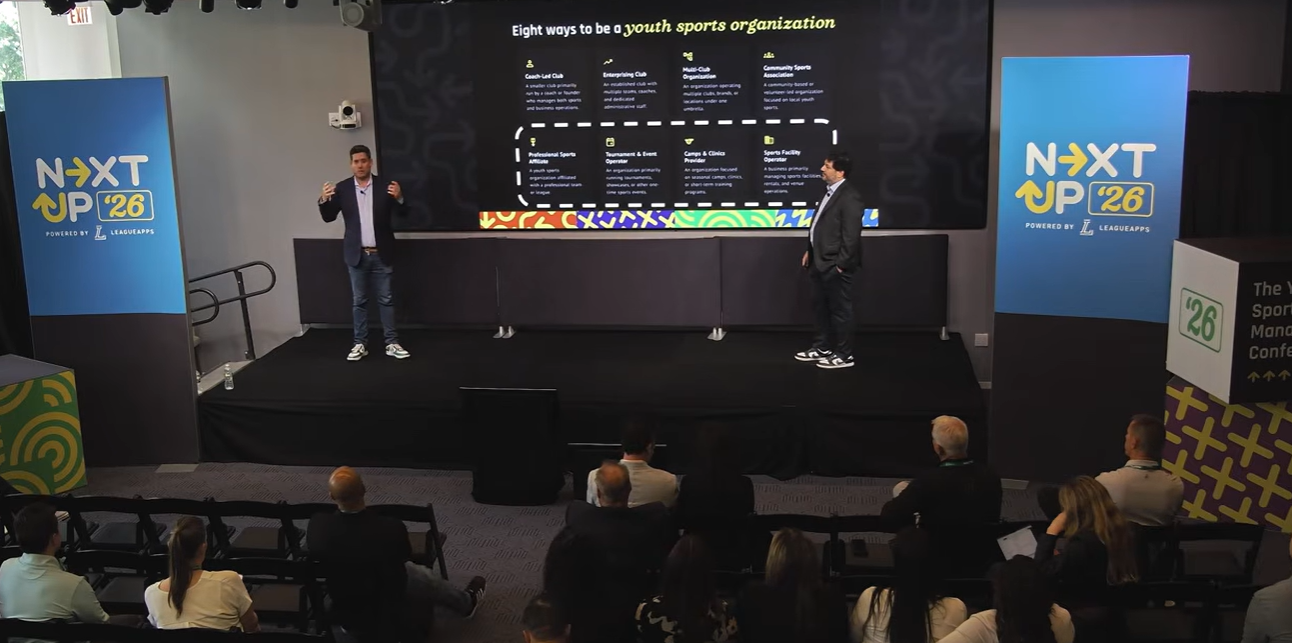
LeagueApps co-founders Jeremy Goldstein & Brian Litvack on the state of youth sports. Watch their fantastic intro video here
Youth sports has evolved into a multi-billion-dollar industry, attracting private equity, consolidation, and M&A activity. While some investors follow the standard corporate playbook of growing, trimming, and reselling, much of this consolidation is driving real operational progress behind the scenes:
Upgrading administrative operations and systems
Hiring, training, developing, and retaining quality staff
Standardizing safety standards, background checks, and positive coaching methodologies
As parents, these are the exact organizational capabilities we hope programs are building. For too long, the youth sports experience has been fragmented, with leaders figuring things out on the fly. Biennial board turnover, sports directors forced into business operations roles without proper training, and well-intentioned parents patching administrative gaps often create operational chaos.
Professionalizing customer service, onboarding, administration, and organizational systems replaces guesswork with consistency—ultimately delivering a safer, higher-quality experience for young athletes.
This isn't about taking the heart out of local sports—it's about building an infrastructure that allows coaches to focus on coaching and kids to focus on playing. Local clubs don't need multi-million dollar buyouts to modernize. They can start with a simple audit:
Separate sport from business: Letting technical directors focus on player development while delegating or outsourcing software, registration, and admin operations.
Standardize onboarding: Create clear, repeatable training for every coach and volunteer regarding safety, communication, and culture.
Build for continuity: Move away from the institutional knowledge that leaves when a board member steps down. Document systems so the next generation of leadership inherits a stable program.
Looking at our local Lamorinda sports clubs, it's clear that some are prioritizing these operational shifts much more than others. Gaining a collective understanding of where our local organizations stand today is the first step toward raising the standard for all our young athletes moving forward.